Making a home more sustainable is not one product but a combination of measures. The right order saves money: there is no point in installing a large heat pump in a house that leaks heat through the roof and single glazing.
Insulation
Insulation is the foundation of every sustainable home. It keeps the warmth in during winter and the heat out in summer.
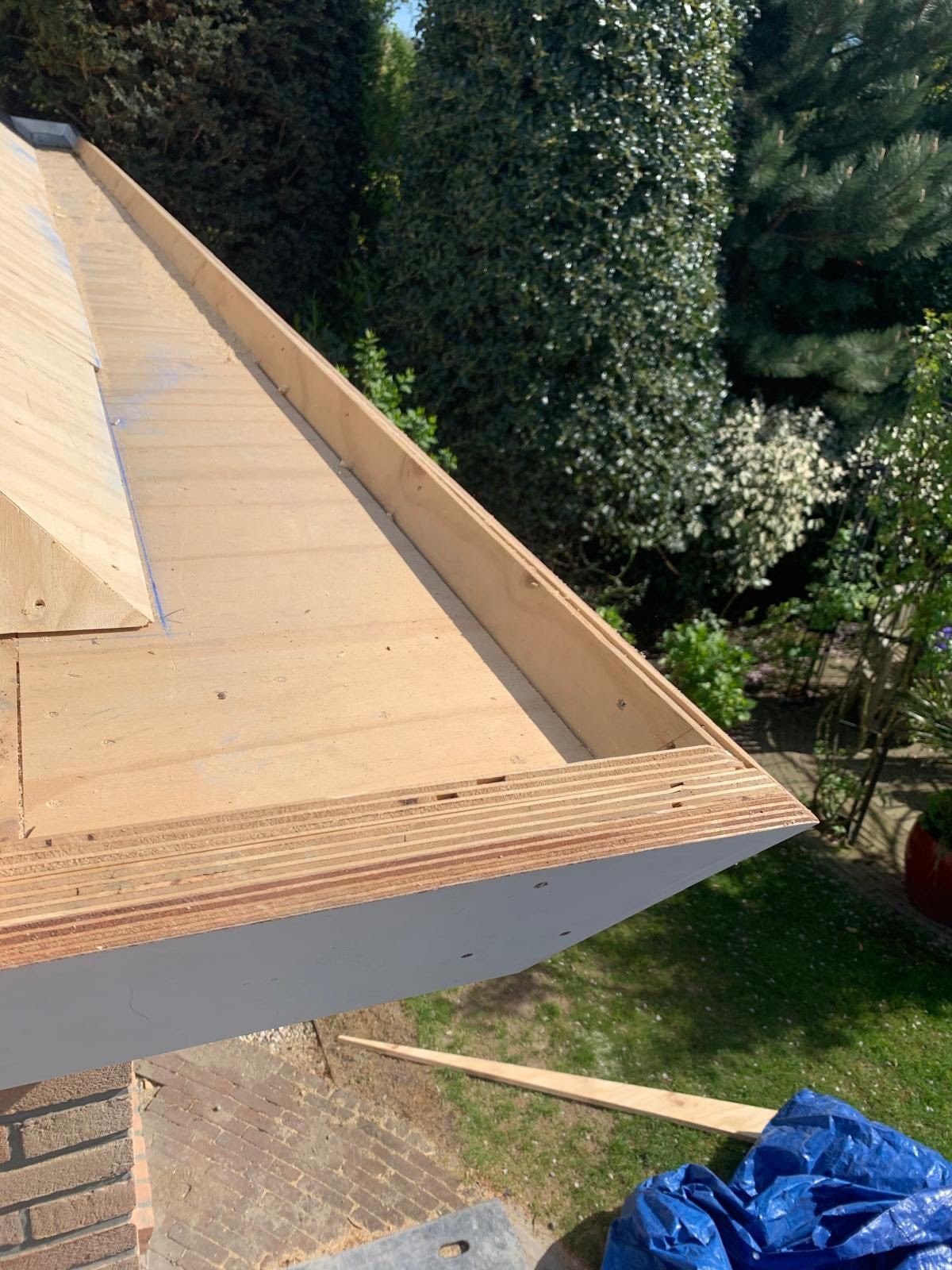
- Roof insulation: from the inside on pitched roofs, or on top when a flat roof is renewed. See roof work.
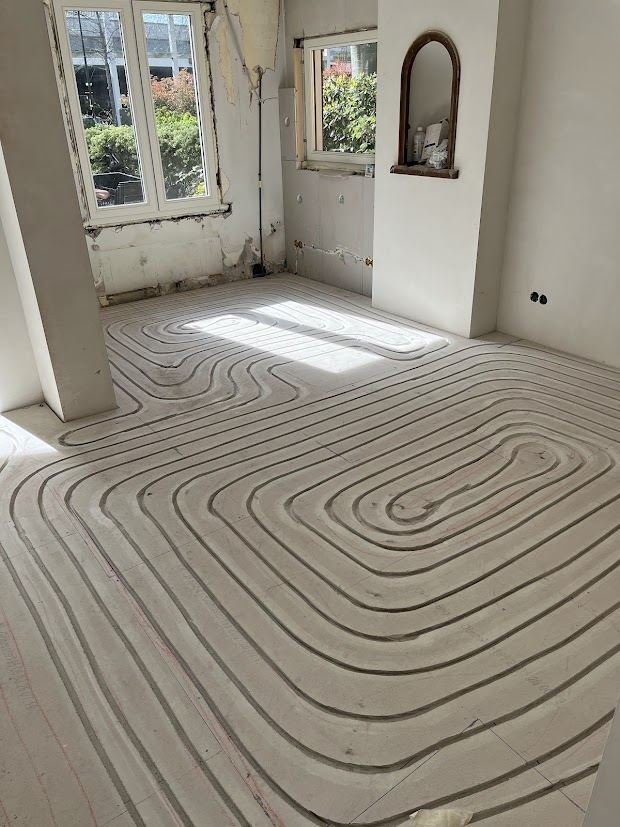
- Floor insulation: under wooden floors via the crawl space, or as part of a new floor with underfloor heating.
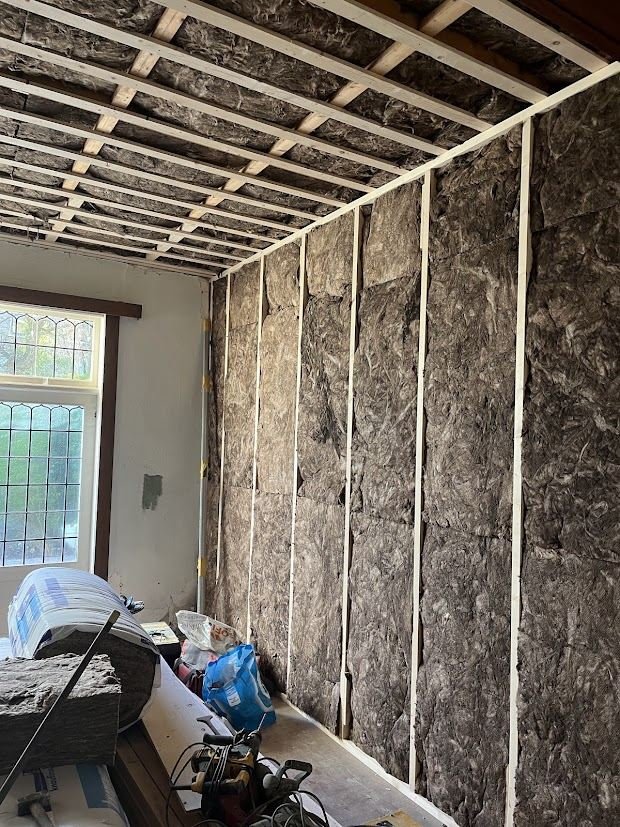
- Wall insulation: cavity wall insulation where there is a cavity, or insulation on the inside of solid walls, as in our insulation project.
- Glass and frames: HR++ or triple glazing and draught-free window frames.
Heat pump
A heat pump extracts heat from the outside air or the ground and uses electricity instead of gas. A hybrid heat pump works together with your existing boiler and is a good first step for many older homes. A full electric heat pump replaces the gas boiler completely, but needs a well-insulated house and works best with low-temperature heating such as underfloor heating.
Solar panels
Solar panels generate electricity on your own roof. Before installation we check the roof condition, the orientation and possible shade from trees or buildings. For homes, VAT on solar panels has been 0% since 2023. The net metering scheme ends on 1 January 2027, which makes using your own power during the day more important.
Home battery
A home battery stores the solar power you do not use during the day, so you can use it in the evening. It makes most sense in combination with solar panels, a heat pump or an EV charger. We look at your consumption pattern before advising a battery size.
Air conditioning
A split air conditioning unit cools in summer and can heat efficiently in spring and autumn. Installation requires a certified installer because of the refrigerant. The outdoor unit needs a good spot: think of noise for the neighbours, the VvE in apartment buildings and the rules in a protected cityscape.
Air conditioning starts from around €1,500, depending on the system, the number of rooms and how easy it is to place the outdoor unit.
EV charger
With a driveway or garage, a home charging point is the most convenient way to charge an electric car. We check whether your electrical connection and fuse box can handle the extra load. Without a private driveway, you can usually apply to the municipality for a public charging point in your street.
Your electrical connection
A heat pump, induction hob, EV charger and home battery together ask a lot of the electrical installation. Sometimes the fuse box needs more groups, or the grid connection needs an upgrade. We check this in advance, so there are no surprises.
Planning it as one project
The most cost-effective approach is often to combine sustainability with a renovation: insulate while walls and floors are open anyway, and lay underfloor heating when the floor is renewed. Read our guide heat pump, solar panels or insulation first? for the reasoning behind the order.
Frequently asked questions
What does air conditioning cost?
Air conditioning starts from around €1,500, depending on the system, the number of rooms and the position of the outdoor unit.
Where should I start making my home more sustainable?
With insulation and draught-proofing: roof, floor, walls and glass. Then look at the heating (heat pump) and finally at generating and storing energy (solar panels and a home battery). We help you decide what makes sense for your home and budget.
Is there a subsidy for a heat pump or insulation?
There is a national subsidy scheme (ISDE) for heat pumps and insulation, and sometimes local schemes. Amounts and conditions change, so check the website of RVO (Netherlands Enterprise Agency) or the municipality for the current rules.
Do solar panels still pay off after the net metering scheme ends?
The Dutch net metering scheme (salderingsregeling) ends on 1 January 2027. Solar panels still save money on the electricity you use yourself, and a home battery or smart use of appliances helps you use more of your own power. We explain the options for your situation.
Can you install air conditioning in an apartment?
Often yes, but the outdoor unit usually needs VvE approval, and in a protected cityscape it may not be allowed on the front facade. Noise rules also apply. We check this before installation.