Renovating in another country means learning a new vocabulary. Dutch contractors have their own habits and terms, and knowing them helps you avoid misunderstandings. Here are the most important ones.
The quote: offerte
The offerte is the written quote. In the Netherlands it is normal to ask two or three contractors for an offerte for the same work. A good offerte includes:
- the scope of work, described per part;
- the price, with VAT (BTW) included or clearly stated;
- what is not included (exclusions);
- the expected start date and duration;
- the payment terms;
- how long the offerte is valid.
Some quotes use a stelpost: a provisional amount for something that cannot be priced exactly yet, such as tiles you still have to choose. Make sure you understand which parts are fixed and which are provisional.
Fixed price or hourly basis
Most renovations are done for a fixed price (aanneemsom): one agreed price for the agreed scope. You know where you stand, and only approved extra work changes the price. The alternative is working on an hourly basis (in Dutch often called regie): you pay for the hours worked plus materials. That gives flexibility when the scope is hard to define up front, for example with small repairs or restoration work. We offer both; you choose.
Extra and less work: meerwerk and minderwerk
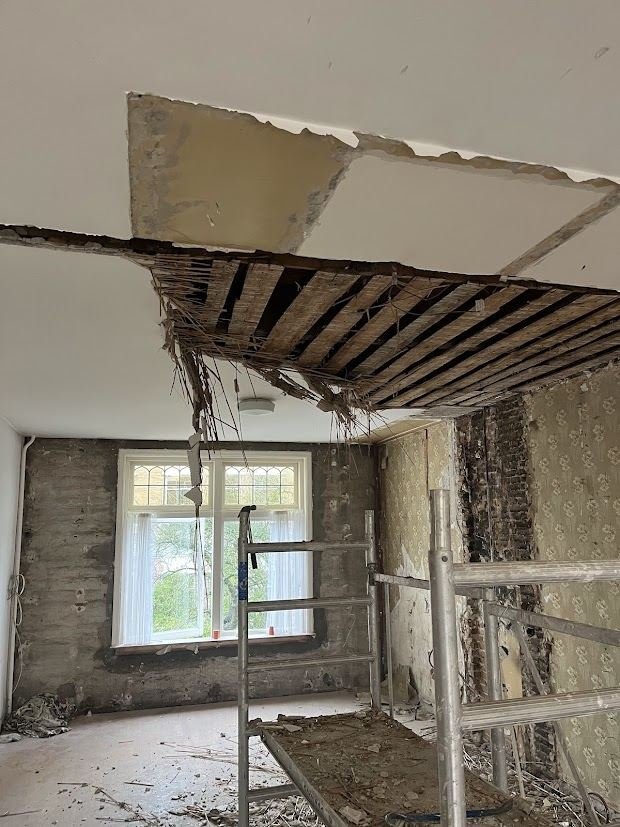
Meerwerk is extra work outside the agreed scope. In older homes it is common, for example when rotten joists or old pipes appear. Minderwerk is work that is removed from the scope. Agree in advance that meerwerk is only carried out after you have approved the price in writing, even if it is just a message or email.
Payment in instalments: termijnen
For larger projects payment is usually split into termijnen (instalments) linked to progress, for example:
- at the start or when materials are ordered;
- when a main phase is completed;
- at the handover.
Payments should follow the progress of the work. Be cautious with large payments up front.
VAT: BTW
Dutch prices for consumers usually include 21% VAT. For certain labour on homes older than two years, such as painting, plastering and insulation, a reduced rate currently applies to the labour part. A good quote shows this clearly.
Planning and the weather
Outdoor work such as roofing, brickwork and exterior painting depends on the weather. Builders' holidays (bouwvak) in summer can also affect planning. Ask for a realistic planning and how delays are communicated.
The handover: oplevering
At the end of the project there is an oplevering: you walk through the finished work with the contractor. Any defects or unfinished details are noted as opleverpunten (snagging points), with an agreement on when they will be fixed. Take your time and check everything: doors, taps, sockets, paintwork, sealant joints.
Permits and VvE
For some work you need a permit (omgevingsvergunning) or, in an apartment, approval from the VvE (the owners' association). Read do you need a permit for an extension? and VvE approval for renovations.
Communication
The single most important factor is clear communication. Working with a contractor who speaks and writes English means you understand the offerte, the planning and every decision during the work. That is the basis of how we work; see how to find a reliable contractor in The Hague.
Planning a project? See our full renovation and extension services, or request a free quote.
Frequently asked questions
What does meerwerk mean?
Meerwerk is extra work that was not in the original quote, for example because something unexpected was found or because you changed your mind. Minderwerk is work that is dropped. Both should be agreed in writing.
How are payments usually structured?
For larger projects payments are usually split into instalments (termijnen) linked to milestones, for example at the start, when the structure is finished and at handover. Avoid paying most of the total before the work is done.
What is the oplevering?
The formal handover at the end of the project. You walk through the work with the contractor, note any snagging points (opleverpunten) and agree when they will be fixed.